Practical AI. Real business.
Put AI to work in your business.
Learn at your own pace. Build useful tools for your business.
Claude Code first. Claude Cowork next.

Shift your thinking. Change how you work.
- See new
possibilities - Harness AI
- Implement
ideas - Focus on
outcomes - Transform
how you work
For nontechnical founders
Start here. Build from there.
Build the tools your business needs with Claude Code. Then put Claude Cowork to work on the tasks around them.
-
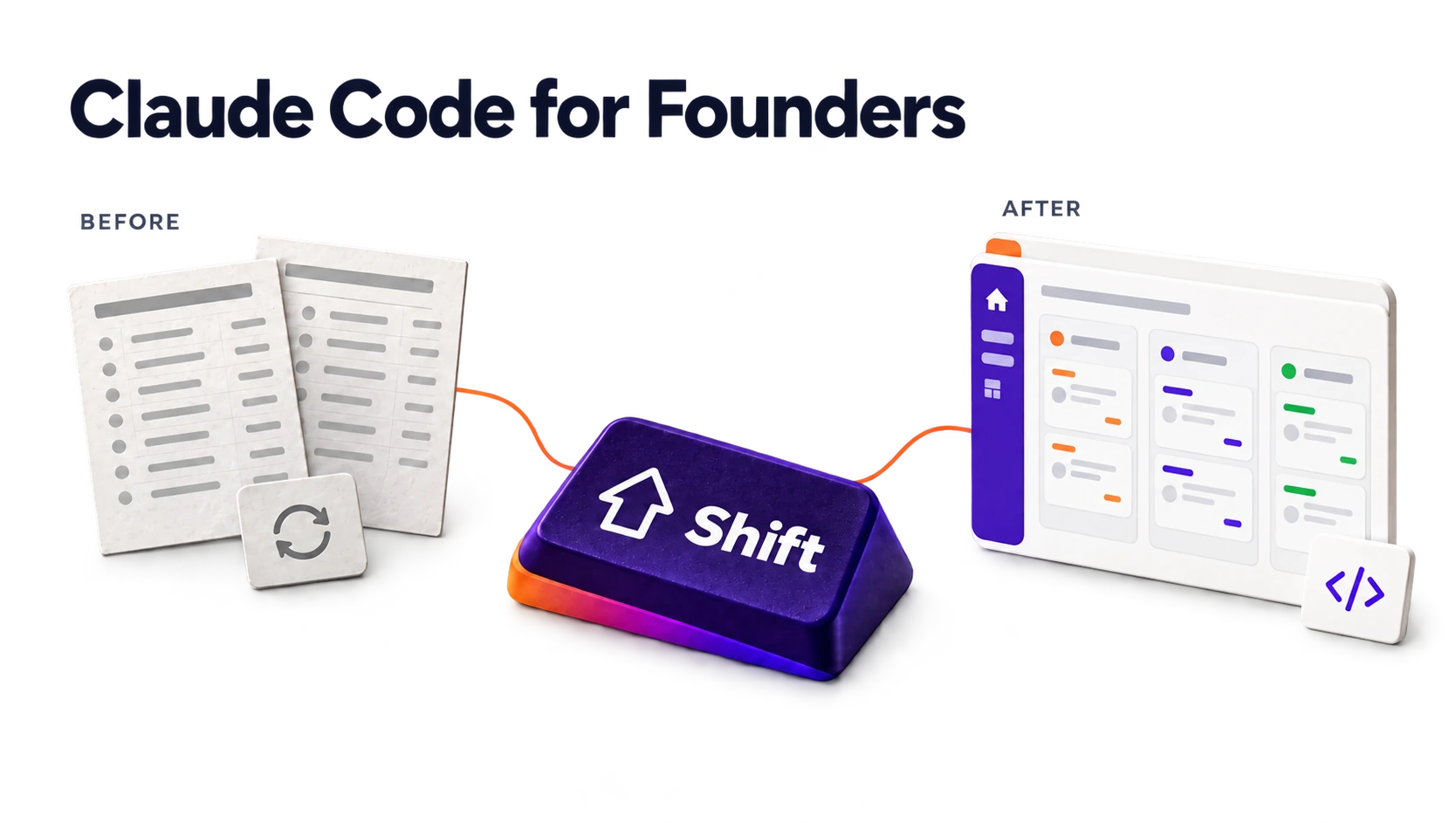
01 · Flagship course
CLAUDE CODE FOR NONTECHNICAL FOUNDERS
Build Your Business Tools
Turn a business problem into a working prototype, from customer trackers to tools for daily operations.
Learn at your own pace
Explore the flagship course -

02 · Coming next
CLAUDE COWORK FOR NONTECHNICAL FOUNDERS
Get Your Business Work Done
Turn scattered files, notes and recurring tasks into research briefs, organised documents and work ready for review.
Learn at your own pace
Explore the proposed outline
How the workflow comes together.
From your input to a useful draft, with every decision still yours.
Notes in different places.
A question worth answering.
Bring customer feedback and a question to investigate.
Group recurring needs and link them to supporting notes.
Check each pattern against the evidence. Decide what to ask next.
Customer insight brief
- What keeps coming up
- Getting started feels unclear.
- Evidence to revisit
- Compare comments from new and returning customers.
- A useful next question
- What would make the first step easier?
Ready for your review, not a final conclusion.
A client brief.
Your way of working.
Bring the client brief, service details and your proposal template.
Draft the goals, deliverables and questions in your preferred tone.
Verify scope, prices and commitments before sharing with a client.
First proposal outline
- Project goal
- Help visitors find the right service.
- Draft scope
- Discovery, page structure and content review.
- Questions to resolve
- Who supplies content? What needs approval?
A starting point for your scope and judgment.
A full list.
Competing priorities.
Bring your tasks, deadlines and pending decisions.
Suggest a sequence and flag dependencies or missing information.
Set priorities against your capacity. Leave room for the unexpected.
A plan for the week
- First priority
- Finish the client brief before drafting.
- Next decision
- Confirm which feedback needs action.
- Room to adjust
- Leave space for work that cannot wait.
Your priorities. Your final plan.
Illustrative workflow examples.
Explore the first courseLearn at your own pace.
Work through the lessons around your schedule, with time to practise on a task from your own business.
- 01
Take one lesson at a time.
Pause to make notes or try an exercise before moving on.
- 02
Choose a rhythm you can keep.
Fit study sessions around the demands of your business.

Practical by design.
Learn the process. Keep the judgment.
Start with a business task.
Work on a customer question, proposal or operational task.
Show the process.
See how context, instructions and revision improve a draft.
Keep judgment with you.
Check the evidence and decide what is ready to use.
A few useful
answers.
A clearer picture of the approach, and what is still to come.
Who is ShiftToAGI for?
Nontechnical startup founders, entrepreneurs and business operators who want to use AI to build practical tools and improve everyday work. Start with a business problem you understand.
Do I need to know how to code?
The Claude Code flagship is designed for people without a coding background. The proposed course introduces the essentials of briefing, building, testing and reviewing a small tool. You will still need to learn the process, check the results and recognise when technical help is needed.
What does learning at my own pace mean?
Work through the material around your schedule and take time to apply an idea to your own business. Lesson duration, access period and support details will be published with the course before enrolment opens.
How are Claude Code and Claude Cowork different?
Our Claude Code course focuses on building software prototypes and small business tools. The planned Claude Cowork course focuses on everyday knowledge work such as research, documents, spreadsheets and organising information. Exact tool access and course requirements will be confirmed before enrolment.
How do I apply this to my own business?
Choose a recurring task you know well. Add your own business context, adapt the example, then check the facts, assumptions and suitability of the result before using it.
Where will I access my course?
Courses will be hosted on TagMango, where you’ll access your lessons and learner account. Course links will be added when enrolment opens.
Can I enrol now?
Not yet. Claude Code is the flagship course in development, and Claude Cowork is planned as the second course. Final curriculum, pricing, tool requirements and access terms will be shared before enrolment opens.
Your business idea.
Your first working tool.
Explore our Claude Code flagship for nontechnical founders. Start with a problem from your business and learn the steps toward a useful prototype.